
Tagine in Erfoud
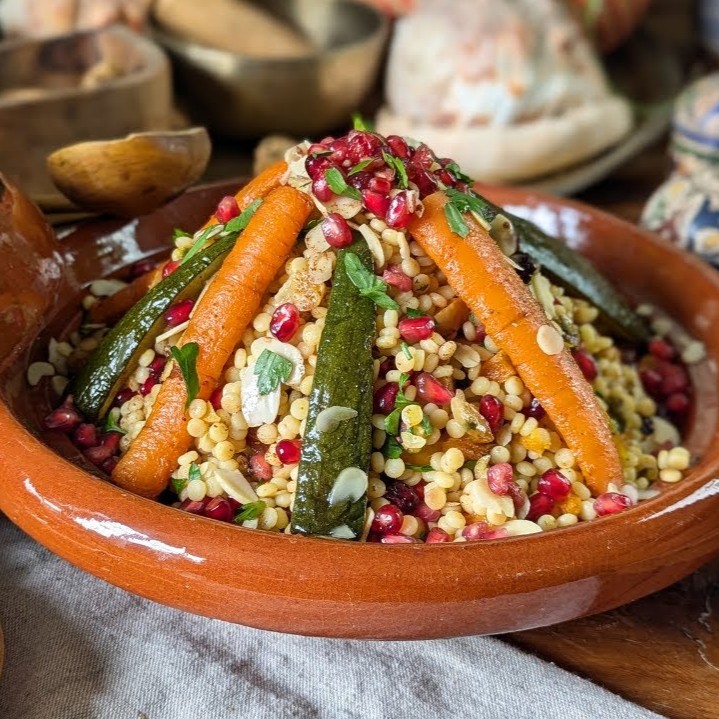
Slow Cooking in the Desert Tradition
In Erfoud, the tagine is not simply a popular Moroccan dish, it is a culinary expression shaped by desert life, patience, and environmental adaptation. While tagines are found throughout Morocco, those prepared in the Tafilalet region reflect a distinct philosophy rooted in simplicity, balance, and respect for natural ingredients.
This slow-cooked meal tells the story of how Saharan communities learned to cook efficiently in a demanding environment, using time—not excess—to create depth of flavor.
The Desert Philosophy of Slow Cooking
Desert life has always required careful use of resources. In Erfoud, cooking methods evolved to:
Conserve water
Preserve nutrients
Reduce fuel consumption
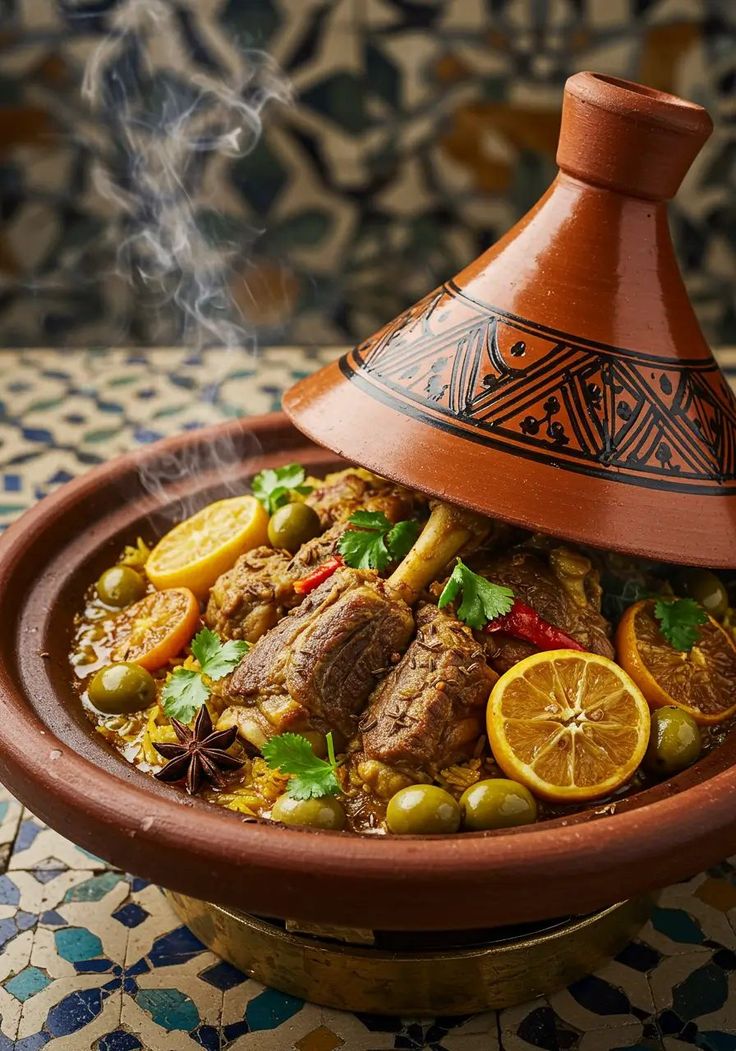
The tagine’s conical clay lid plays a central role by trapping steam, allowing food to cook slowly while remaining moist. This method produces tender meat and vegetables without the need for large quantities of liquid.
Slow cooking is not a luxury here—it is a necessity turned into tradition
Ingredients Guided by Oasis Life
Tagines in Erfoud are prepared using ingredients that reflect the agricultural reality of oasis regions.
Meat
Lamb and beef are most common, often used in moderate portions. Meat is valued, respected, and never wasted, reinforcing the principle of measured consumption.
Vegetables
Seasonal vegetables such as:
- Onions
- Carrots
- Turnips
- Squash
These are selected based on availability, ensuring freshness and sustainability.
Spices
Unlike heavily spiced versions found elsewhere, Erfoud tagines use spices sparingly:
- Cumin
- Ginger
- Saffron
- Black pepper
The goal is to enhance, not dominate, the natural taste of ingredients.
Typical Tagines of Erfoud
Several tagine styles are particularly associated with the region:
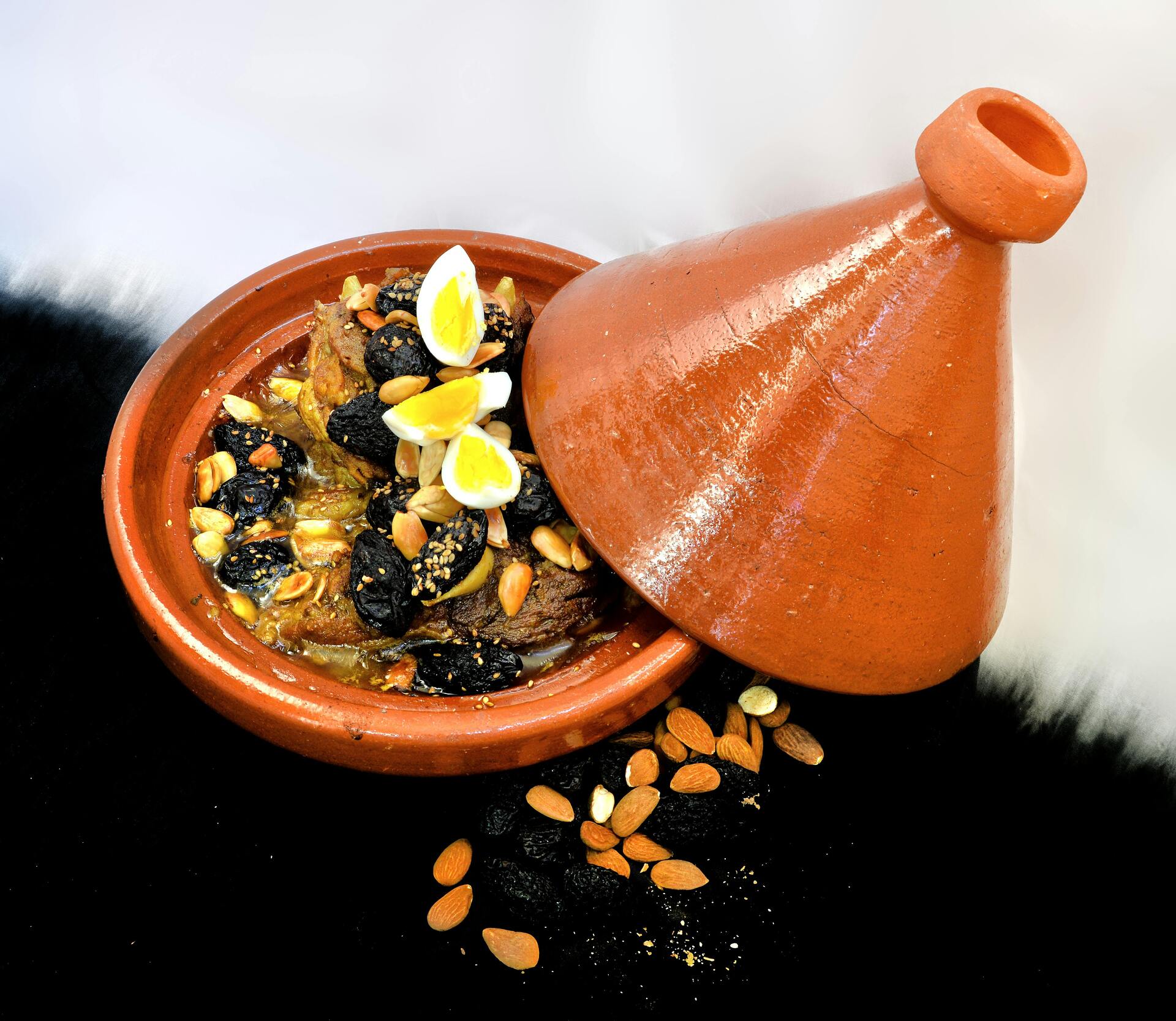
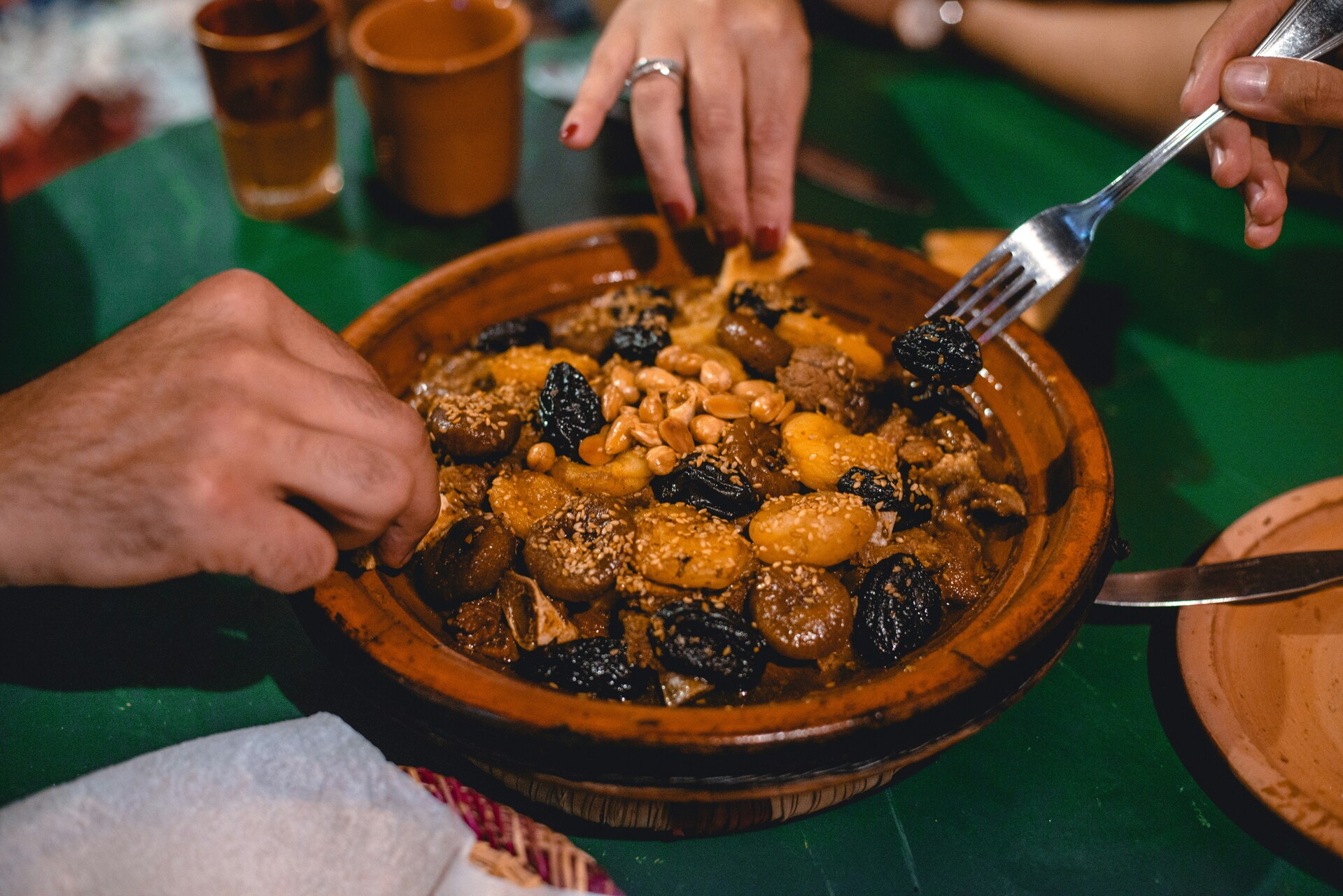
Almond tagine
combining savory and natural sweetness
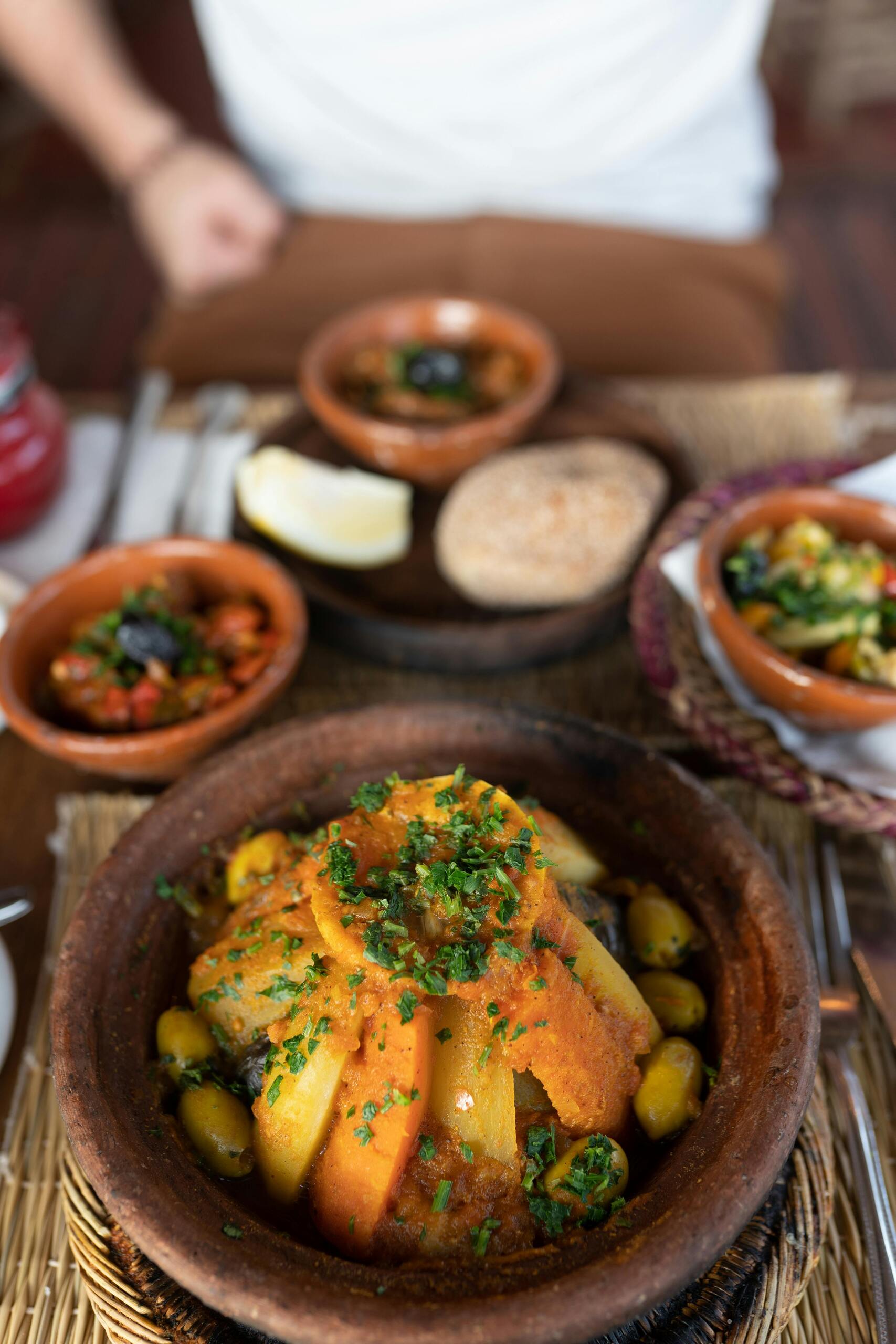
Chicken tagine with vegetables
light and balanced
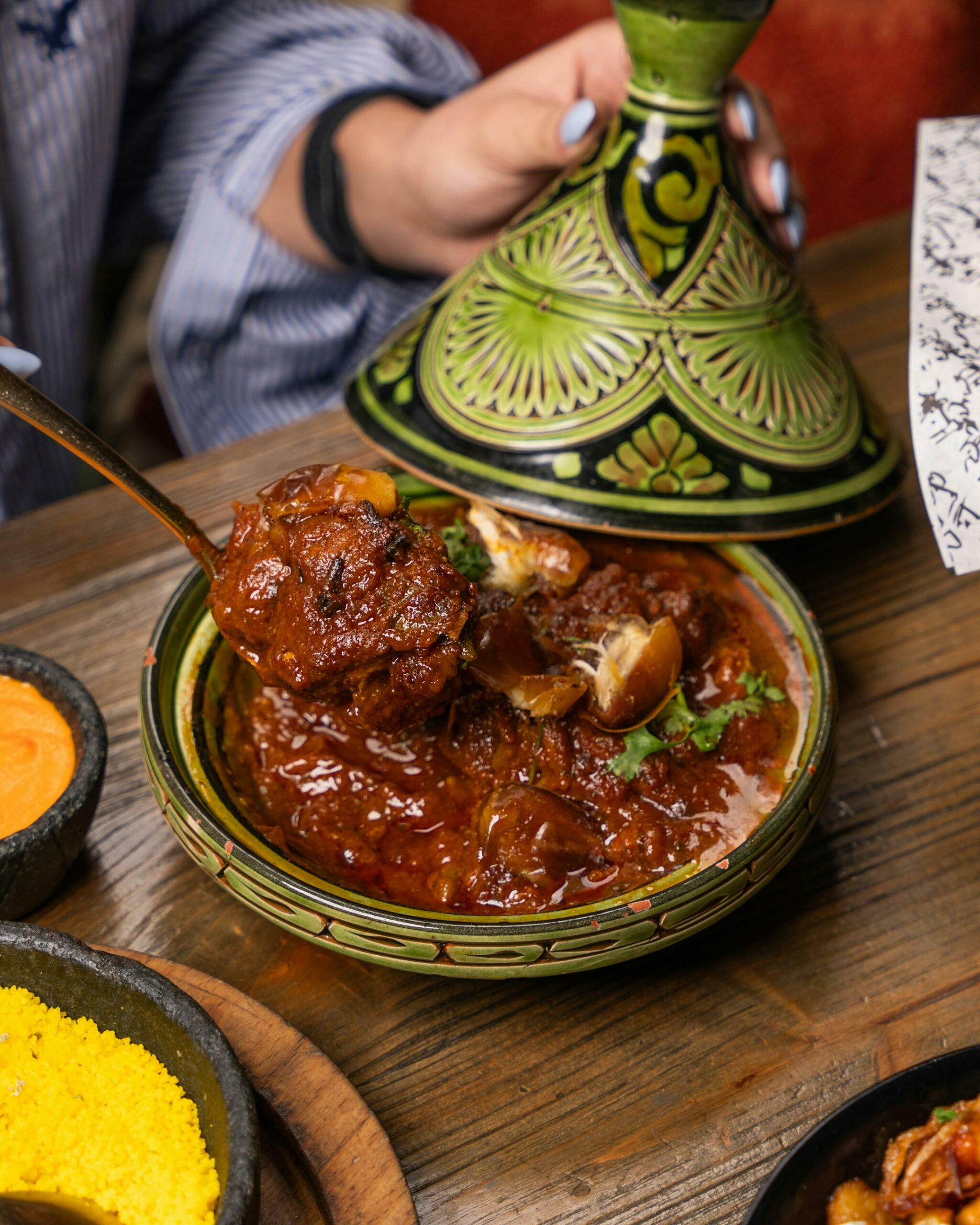
Lamb tagine with onions and mild spices
slow-cooked until tender
These dishes reflect a culinary identity focused on harmony rather than intensity.
Cooking as a Social Practice
Tagines in Erfoud are usually prepared for:
Cooking is often a shared responsibility, with knowledge passed orally between generations. The meal is served in the center of the table and eaten communally with bread, reinforcing social equality and hospitality. This practice transforms the tagine from a dish into a social ritual.
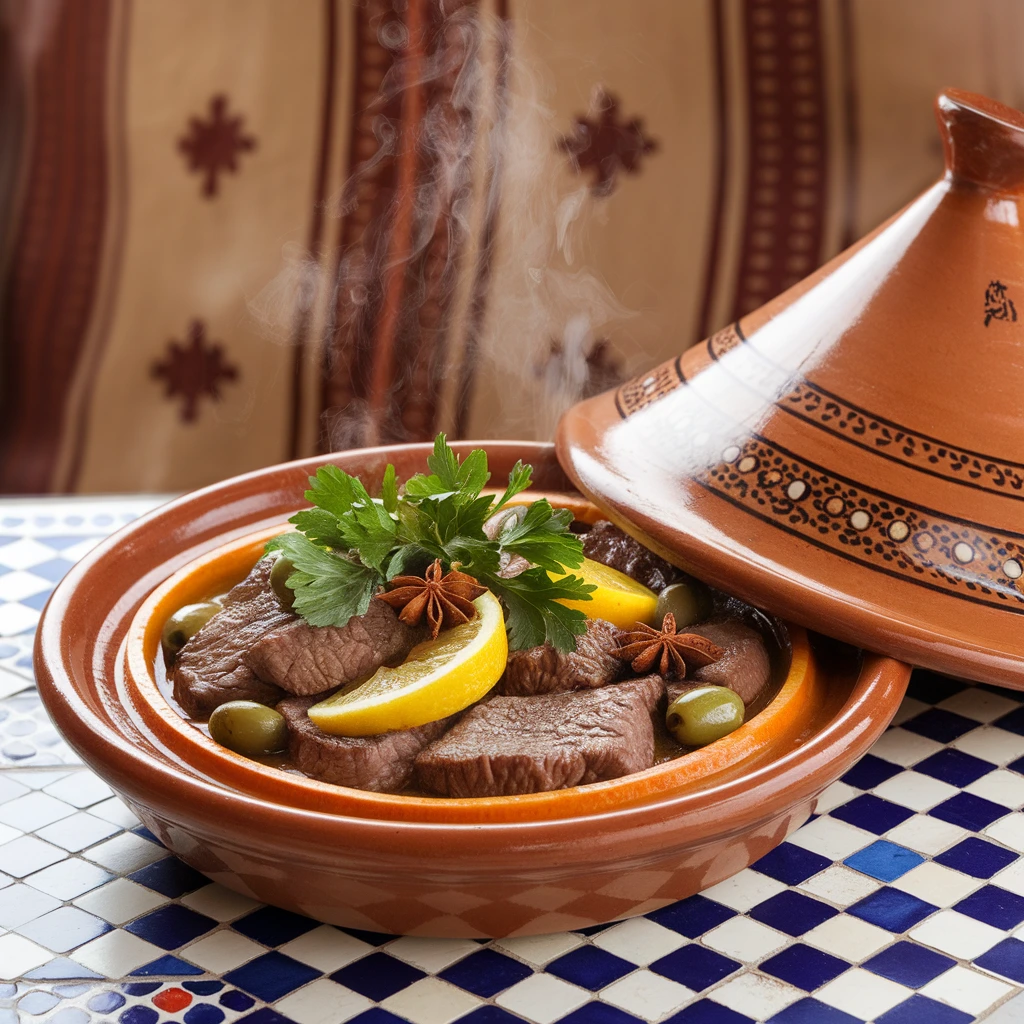
Tagine and Hospitality in Erfoud
Frequently Asked Questions
What makes tagine in Erfoud different from tagine in other parts of Morocco?
Tagine in Erfoud (Tafilalet region) is typically simpler and more balanced, using seasonal oasis ingredients and moderate spices to highlight natural flavors rather than heavy seasoning.
What is the most traditional Moroccan tagine to try in Erfoud?
Popular options in Erfoud traditional cuisine include lamb tagine with onions and mild spices, chicken tagine with vegetables, and local sweet-savory versions like almond tagine.
Which spices are commonly used in Erfoud tagines?
Many recipes use spices sparingly. Common choices include cumin, ginger, saffron, and black pepper, aiming to enhance—not dominate—the ingredients.
Why is tagine cooked slowly in the desert regions like Erfoud?
Slow cooking helps conserve water, reduce fuel use, and keep food tender. The conical tagine lid traps steam so the dish cooks with minimal liquid—ideal for desert environments.
Is tagine in Morocco always spicy?
No. Tagine in Morocco varies by region. In Erfoud, tagines are often mildly spiced and focused on ingredient quality and slow cooking.
What vegetables are used in traditional tagines in Erfoud?
Common seasonal vegetables include onions, carrots, turnips, and squash, reflecting what’s available in oasis agriculture.
Is eating tagine in Erfoud a cultural experience?
Yes. Sharing a tagine is tied to hospitality and community, often eaten communally with bread and served during family meals, religious gatherings, and guest visits.
Where can visitors eat authentic Moroccan food in Erfoud?
For authentic Moroccan food in Erfoud, look for family-run restaurants, guesthouses (riads), or locally hosted meals that prepare tagine in traditional clay cookware.