Erfoud Morocco Fossils: Real, Legal and Worth Buying
Erfoud is known around the world for its fossils. Polished slabs full of ancient shells, trilobites with spiny armor and fossil limestone tables fill the workshops and shops of this small desert town. Yet visitors often ask the same questions: are these fossils real, can they be taken home, and how do you avoid a bad purchase?
This guide to Erfoud Morocco fossils gives you direct answers first, then the details you need to understand what you are looking at, what the rules say and what experienced collectors check before they pay.
Are the fossils found in Erfoud real?
Mostly yes, but quality varies. The region produces genuine Palaeozoic fossils, especially orthoceras (straight-shelled nautiloids) and trilobites. However, many trilobites on the market have been repaired or restored, and some are composites or complete fakes made from plaster, mud or putty. Polished orthoceras slabs are the safest buy, while rare spiny trilobites need the most checking.
Can I legally export fossils from Morocco?
Only with care. Moroccan rules require permits for collecting and commercializing fossils, and the export of palaeontological objects falls under an export permit system. In practice, enforcement is uneven and small shop souvenirs are often carried home, but that is not a legal guarantee. Large, rare or scientifically important specimens are the most sensitive. Rules change, so this is general information and not legal advice: confirm with the Moroccan authorities and your own country’s customs before you buy anything significant.
Why does Erfoud have so many marine fossils if it is in the Sahara Desert?
Because this area was once under water. During the Palaeozoic era, roughly 540 to 250 million years ago, the Drâa-Tafilalet region was covered by a warm, shallow sea. Marine animals died, were buried in limestone and later ended up on dry land. Today’s arid climate leaves the rock exposed, which makes the fossils easy to find.
What are the most famous questions an expert collector asks before buying?
Experts usually ask: Has it been restored, and how much? Does it glow differently under a UV light? Where exactly was it collected, and from what rock layer? Is the matrix (the surrounding stone) original? Is there export paperwork for larger pieces? Can I return it if it turns out to be fake? The full list is further down.
Erfoud fossils at a glance
| Fossil | What it is | Age | Good to know |
|---|---|---|---|
| Orthoceras | Straight-shelled nautiloid, a relative of today’s nautilus | Silurian to Devonian | Very common, usually seen in polished black limestone |
| Trilobites | Extinct sea arthropods with segmented armor | Many Devonian species in the Tafilalt area | Often restored; rare spiny types need the most checking |
| Polished fossil stone | Limestone cut into tables, sinks and art pieces | Palaeozoic | Made in local workshops around Erfoud |
Are the Fossils Found in Erfoud Real?
The fossil beds around Erfoud have been called the largest open-air fossil museum in the world, and the finds are genuinely ancient. The famous black limestone near Erfoud, in the Ziz Valley, is packed with orthoceras shells of Silurian-Devonian age (Wooster geologists). The best-known trilobite localities, such as Hamar Laghdad in the Tafilalt region, are of Early Devonian age (Acta Palaeontologica Polonica). Many trilobites sold in Erfoud come from the wider Tafilalt area, including the Alnif region, rather than from the town itself.
The real question is not whether a fossil is old, but how much of the piece is original. Collectors usually separate three levels:
- Natural or lightly prepared: the fossil was cleaned out of the rock with only small repairs.
- Restored or composite: parts were glued back together, filled with resin or putty, or combined from different animals. Most Moroccan trilobites on the international market have some restoration, because they are rarely found in perfect condition.
- Fake: a cast or sculpture made from plaster, local mud or putty and set into real rock. Some are made from molds of real specimens and can fool experts.
Making fake fossils is not illegal in Morocco, but passing them off as real is, which is why buyer knowledge matters.
How to Check a Fossil Before You Buy
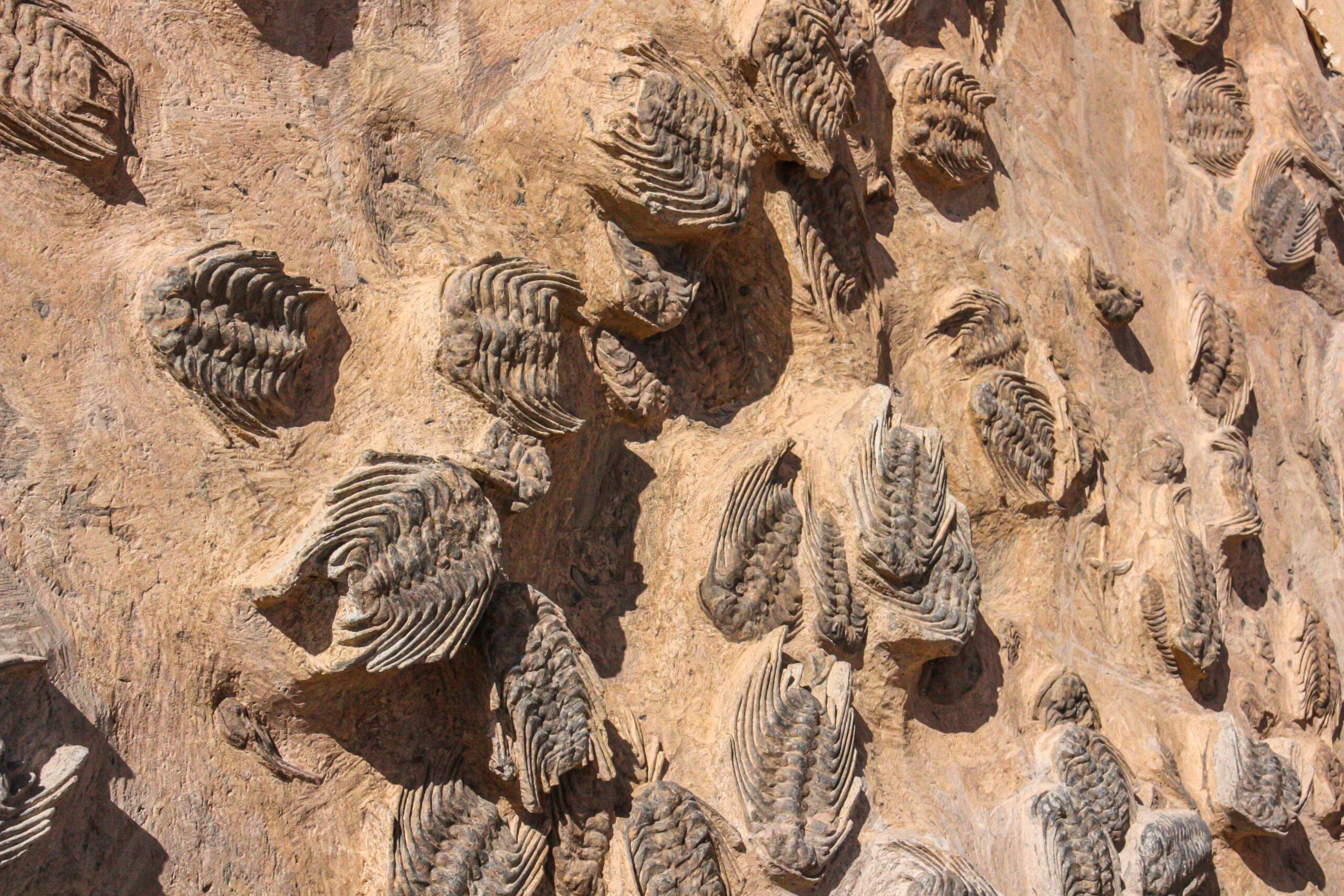
- Use a UV flashlight. Repairs, glue and fillers often glow differently from natural rock. The American Museum of Natural History recommends a UV flashlight and a good hand lens (AMNH).
- Look at the stone around the fossil. A different color or texture, or a fossil that seems to sit on top of the rock, is a warning sign.
- Check for air bubbles and perfect symmetry. Putty and resin often show tiny bubbles under a lens.
- Be suspicious of identical pieces. Rows of exactly the same trilobite usually mean copies.
- Remember price. A rare, spiny trilobite at a bargain price is rarely what it seems.
Polished orthoceras slabs and common shells are rarely worth faking, so they are the easiest place for a first-time buyer to start.
Why Does Erfoud Have So Many Marine Fossils?
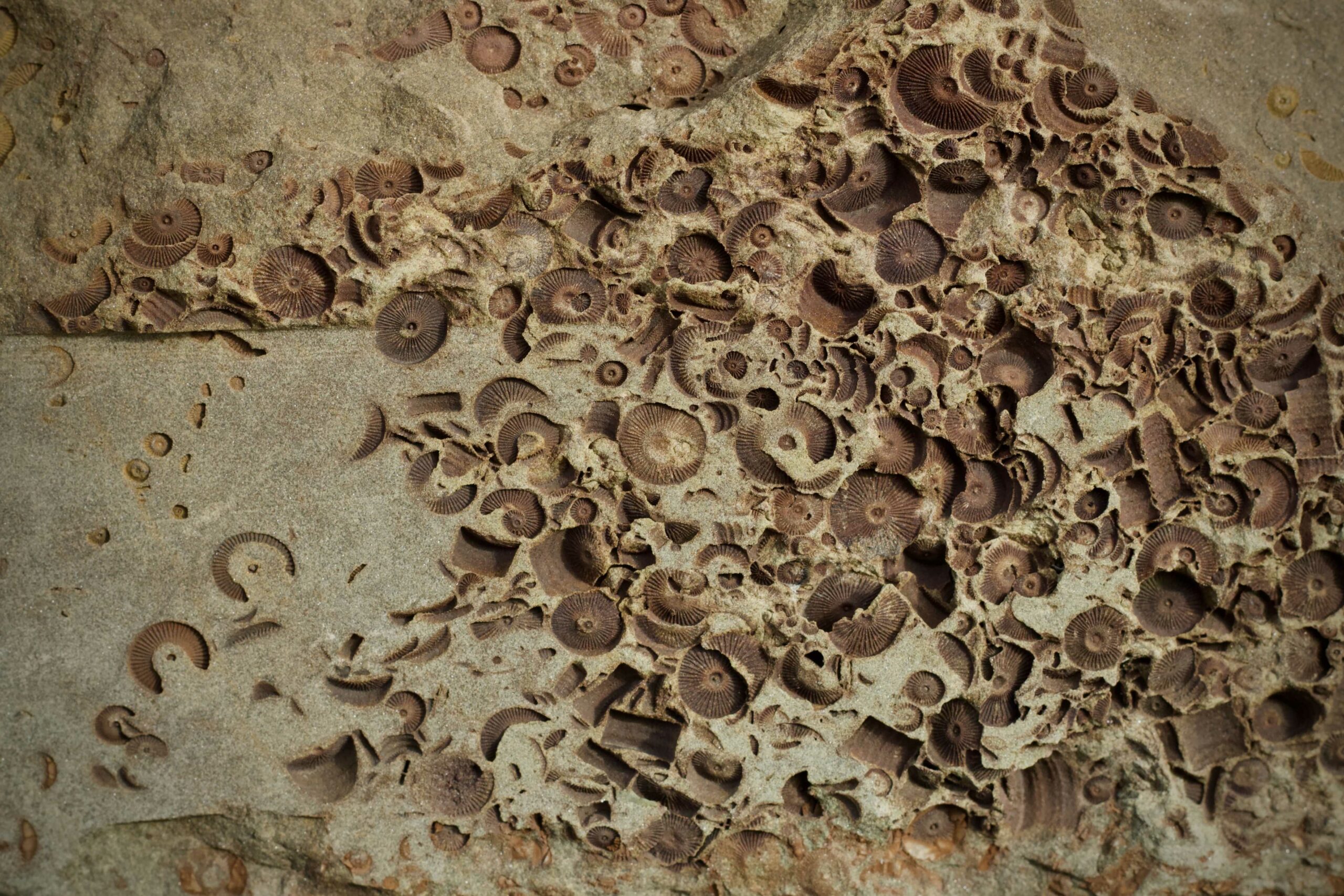
The Sahara has not always been a desert. In the Palaeozoic era, between about 540 and 250 million years ago, the Drâa-Tafilalet region was covered by a warm, shallow sea (Hidden Compass). In places, nautiloid shells were so common that they carpeted the sea floor. Over time, sediment buried the animals, and the layers became limestone and shale.
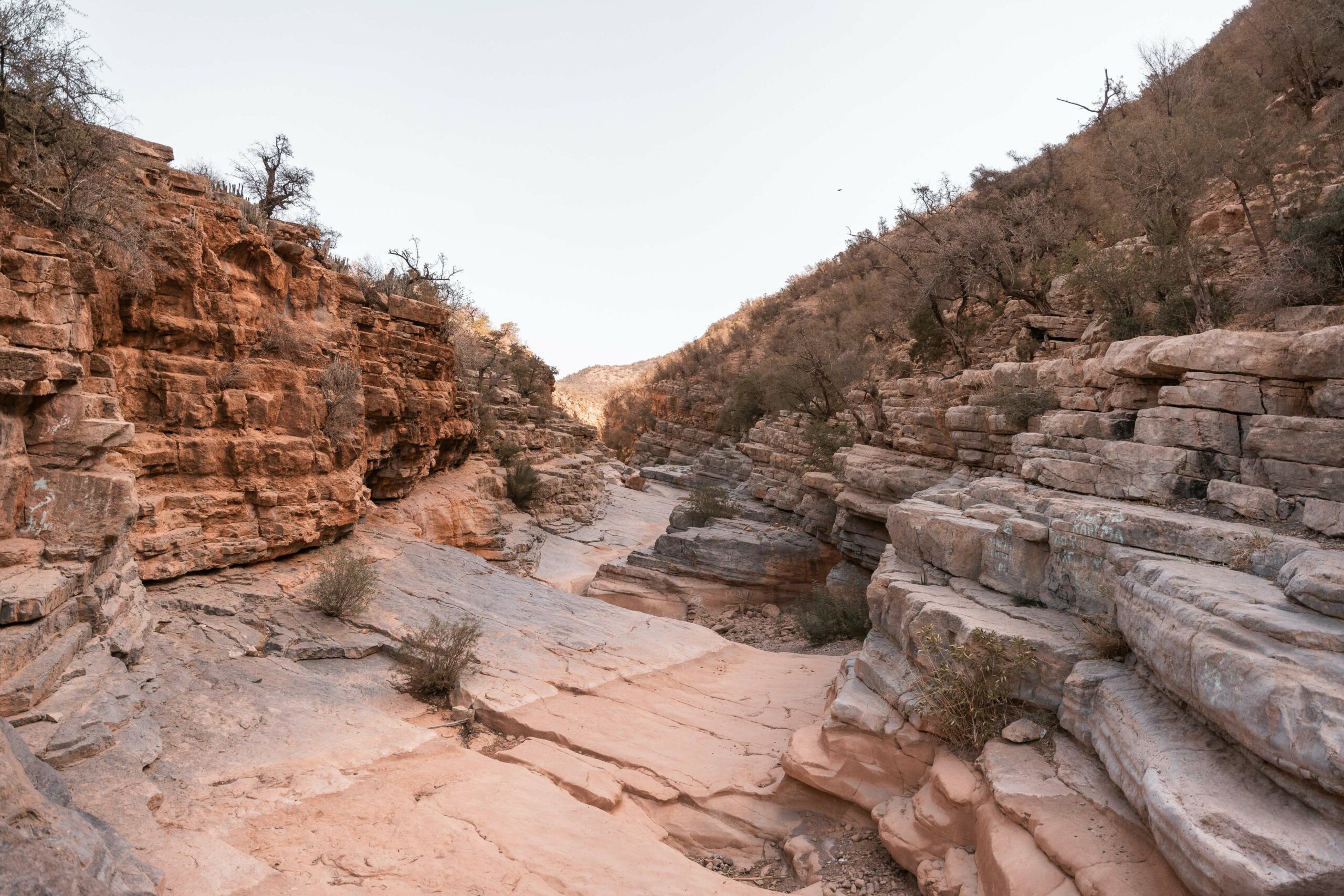
Two things then made Erfoud a fossil hotspot. First, the rock layers were preserved and later exposed in the Anti-Atlas and Tafilalt area. Second, the dry desert climate has little vegetation or soil to hide them. Local workers dig pits and trenches, and middlemen gather in larger towns such as Erfoud to buy and export specimens (Wikipedia).
This is why a visit to a fossil workshop can feel like looking into another world: the stone under the palm groves was once a seabed.
Can You Legally Export Fossils from Morocco?
The short version is that Morocco regulates fossils, and exporting them without the right permits is not allowed. Here is what the sources say:
- Article 116 of the 2015 Mining Code requires permits for the extraction, collection and commercialization of fossils, meteorites and mineral specimens. A decree adopted in 2019 explains the procedures .
- The export of palaeontological objects is covered by Decree 1308-94 of 1994, which makes certain goods subject to an export permit.
- A 2019 draft decree proposed three categories: regular specimens that need no authorization, quota-regulated specimens that need authorization, and unique specimens that may leave only on scientific loan (ENACT Africa).
- Moroccan law allows artisanal mining by locals, and enforcement is often inconsistent. Authorities have also been active abroad: France returned around 25,000 archaeological and palaeontological objects to Morocco in 2021.
What This Means for Travelers
- Buy from an established shop or workshop and ask for a receipt that describes the item.
- Keep small, common pieces such as polished orthoceras or ordinary shells. Large, rare or vertebrate fossils such as dinosaur teeth and bones attract the most scrutiny.
- Ask the seller directly whether larger pieces come with export paperwork, and decline if they cannot explain it.
- Declare fossils if customs ask, and check the import rules of your own country.
- When in doubt, contact the Moroccan ministry responsible for mines and geology or Moroccan customs before you buy.
This is general information, not legal advice, and the rules may have changed since this page was updated.
Questions Expert Collectors Ask Before Buying
| Question | Why it matters |
|---|---|
| Has this specimen been restored, and where? | Most Moroccan trilobites have some restoration. A good seller tells you; “no restoration at all” on a perfect piece deserves a second look. |
| Can I check it under UV light? | Glue, fillers and resin often glow differently from natural rock. |
| Is the surrounding rock original? | A fossil set into a different stone is a common sign of a fake or composite. |
| Where exactly was it collected, and from which layer? | Locality and age affect value and scientific interest. Many fossils are sold with no data at all. |
| Is it one animal or a composite? | Some pieces combine parts of several trilobites or mix species on one plate. |
| Is the price realistic for the species? | Common species can cost a few dollars, while rare, high-quality specimens can reach thousands. |
| Is there paperwork for export? | Larger and rarer pieces may need permits, and buyers want proof of legal export. |
| Can I return it if it proves fake? | A trustworthy seller will certify the piece and agree to a refund. |
Where to See Fossils in Erfoud
The easiest way to learn is to watch the craftsmen at work. Local workshops cut and polish fossil-filled limestone into tables, sinks and decorative pieces, and many allow visitors to look around. Ask how a piece was made and compare several shops before you buy. Combine a workshop visit with a sunrise walk in the palm groves or an afternoon among the dunes around Erfoud, and read about culture and daily life to understand the people behind the fossil trade.
Buy Responsibly
More than 50,000 Moroccans earn a living in mining, trading or exporting fossils, but most of the profit goes to middlemen and exporters rather than to the diggers (Wikipedia). Scientists also worry that rare finds disappear into private collections before they can be studied. Choose fair, transparent sellers, avoid rare vertebrate fossils and favor common pieces.
Frequently Asked Questions - Erfoud morocco fossils
Are fossils expensive in Erfoud?
It depends on the species and quality. Common trilobites can be sold for one or two US dollars, while rare, high-quality specimens have sold for $20,000 or more (Wikipedia). Polished orthoceras pieces are usually a much cheaper entry point.
Is it illegal to make fake fossils in Morocco?
Making fake fossils is not illegal, but selling them as genuine is. This legal grey area is one reason fakes remain on the market.
Can I dig my own fossils near Erfoud?
Not freely. Permits are required for extracting and collecting fossils, so take photos and buy from established sellers instead.
What fossils are most common near Erfoud?
Orthoceras (nautiloid shells) and trilobites are the most common and famous finds, along with fossil limestone made into furniture and decorative objects.
Erfoud’s fossils are genuine windows into a prehistoric sea, but a good purchase depends on knowing what you are buying. Look closely, ask direct questions, keep paperwork and choose modest, common pieces if you plan to take them home.
Want to explore more? Learn about Erfoud, see our Sahara desert excursion page, or contact us to suggest corrections or share your local knowledge.
Ready to plan your trip?
Explore our Sahara desert excursion page, learn more about Erfoud, or contact us to suggest corrections or share your local knowledge.
Very helpful guide! Out of curiosity, btw is Erfoud located relative to Marrakech or Fes???
This answers so many questions I had lingering after my visit. Bookmarking this for the next time I head back down to the Tafilalt region!