Khamlia Gnawa: Music, History and How to Visit
A few kilometers south of Merzouga, where the village houses meet the dunes of the Sahara, the drums of Khamlia carry a story that crosses the whole desert. This small village is known across Morocco as a home of Gnawa music, a tradition born from the memory of people brought north from sub-Saharan Africa and transformed into songs of faith, healing and freedom.
This guide to Khamlia Gnawa gives you direct answers first, then explains who the Gnawa are, what their music means, how Khamlia fits into the story and how to visit with respect.
Quick Answers
What is Khamlia, and why is it famous for Gnawa music?
Khamlia is a village about 7 km south of Merzouga, at the edge of the Erg Chebbi dunes. Its community descends largely from sub-Saharan Africans brought across the Sahara, and it is known for keeping Gnawa music alive in the desert.
Are Gnawa Muslims?
Yes. Gnawa are Muslims, and their tradition is described by UNESCO as first and foremost a Sufi brotherhood music with religious lyrics. It blends Islamic Sufi devotion with ancestral sub-Saharan African practices.
What does Gnawa mean?
The word is often linked to the Amazigh term agnaw (plural ignawen), which refers to Black people from sub-Saharan Africa, and to the expression “land of the Blacks”. Other origin theories exist, so treat any single explanation as a leading view and not a final answer.
Is it Gnawa or Gnaoua?
Both are correct. They are two transliterations of the same word. UNESCO and most English sources use “Gnawa“, while Moroccan media and festivals often write “Gnaoua“.
What genre is Gnawa?
Gnawa is a spiritual and ritual music, built on trance rhythms, call-and-response singing and all-night healing ceremonies. Today it is also played on stage and often blended with jazz, blues and other styles.
What instruments are used in Gnawa music?
The main instruments are the guembri (also spelled gimbri), a three-stringed bass lute, and the qraqeb, large metal castanets. Rural groups often add large drums, such as the tbel.
What desert is Merzouga in?
Merzouga lies in the Sahara Desert, at the edge of the Erg Chebbi dunes in southeastern Morocco.
Is Merzouga, Morocco safe?
Merzouga is a standard, well-established tourist destination, and desert tours are common. Normal precautions still apply: the US State Department rates Morocco Level 2, “Exercise Increased Caution”, because of terrorism, and Germany’s Foreign Office advises taking desert tours with a local operator and registered guides, preferably in a group. Check your government’s current advice before you go.
Which desert is best in Morocco?
It depends on what you want. Merzouga and the Erg Chebbi dunes are the most accessible and have the widest choice of camps and activities. Erg Chigaga, south of Zagora, is more remote and requires a longer journey. For a first visit with limited time, Merzouga is the easiest choice, and you can add Khamlia on the way.
Who is the most famous Moroccan singer?
There is no single answer, because fame depends on genre and generation. In Gnawa, masters such as Maalem Mokhtar Gania are widely respected. For popular music, the answer changes with the charts, so check current rankings.
Are Moroccans Black or Arab?
Morocco’s population is diverse. Most Moroccans have Amazigh (Berber) and Arab heritage, and some communities, including the Gnawa and the people of Khamlia, also have sub-Saharan African roots. Many people speak Arabic, Tamazight or both, and identity is cultural as much as ancestral, so no single label fits everyone.
When did Morocco convert to Islam?
Islam reached Morocco in the early 8th century through the Arab conquests but took root slowly among the Amazigh population. The first Islamic dynasty, the Idrisids, was established in 788.
Is there a Shia community in Morocco?
Only a very small one. More than 99% of Moroccans are Muslim, and most follow the Maliki school of Sunni Islam.
Gnawa at a glance
| Topic | Answer |
|---|---|
| Meaning | Often linked to Amazigh agnaw/ignawen, “Black people“; other theories exist |
| Spelling | Gnawa, Gnaoua (same word) |
| Origin | Descendants of people brought from sub-Saharan Africa, tradition documented since at least the 16th century |
| Religion | Muslim, with Sufi brotherhood traditions and African ancestral practices |
| Music | Trance, ritual and healing music with call-and-response singing |
| Instruments | Guembri, qraqeb, large drums |
| Recognition | Inscribed on UNESCO’s Intangible Cultural Heritage list in 2019 |
| Where in Erfoud region | Khamlia, about 7 km south of Merzouga |
About this guide: Published by visiterfoud.com, a guide created by Erfoud locals and city enthusiasts. Last updated 2 November 2026. Facts about Gnawa culture, religion and safety were checked against the sources listed at the end. Safety advice can change, so check current advisories before you travel.
Where Is Khamlia and Who Lives There?
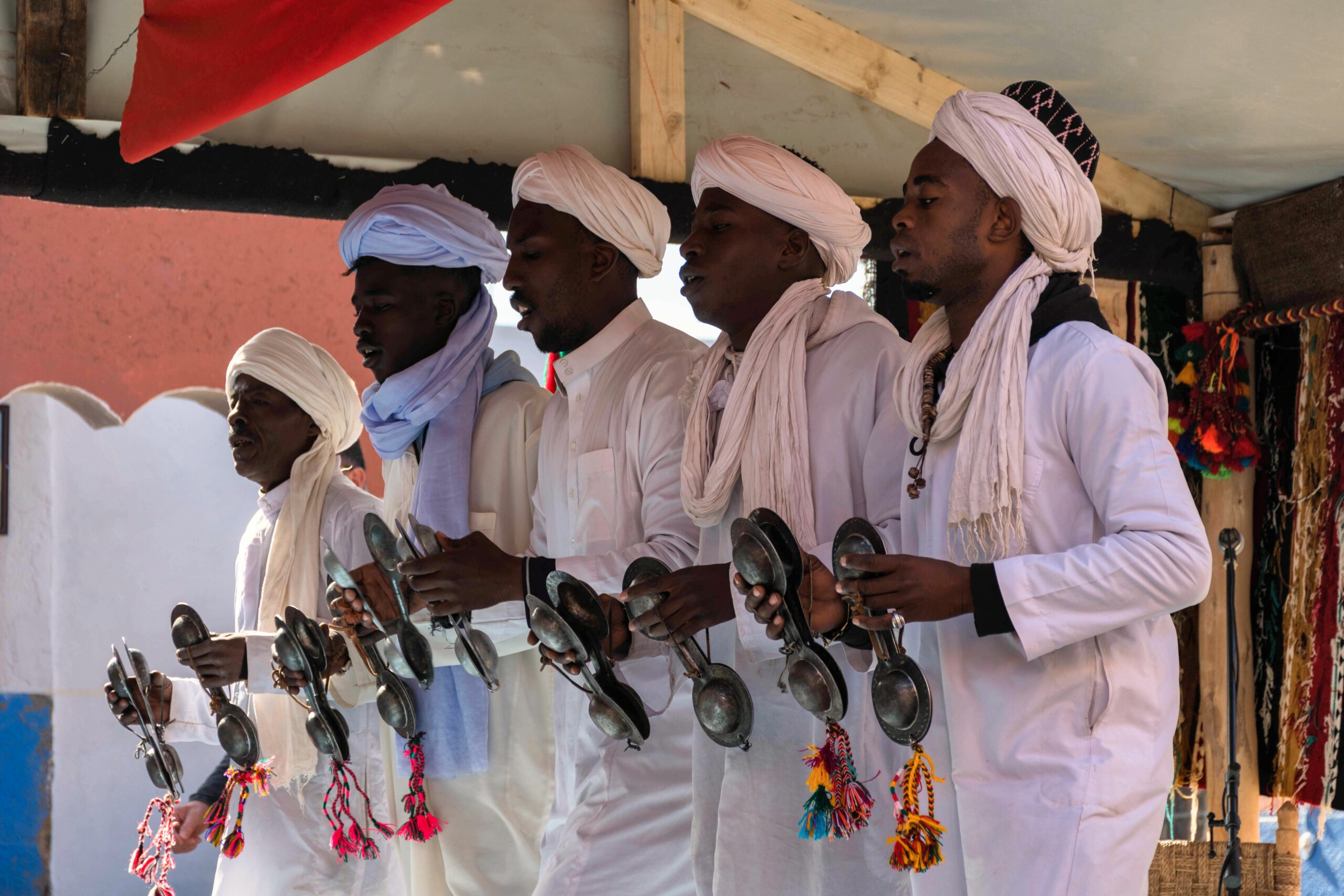
Khamlia lies just south of Merzouga, a short drive from the main dune area, and is sometimes called the Gnawa village. Frommer’s describes it as a place inhabited for more than a century by a mix of Berbers, Bedouin Arabs and communities of sub-Saharan origin . Local sources describe a few hundred residents, many of them Amazigh-speaking, who trace their roots to people brought along the trans-Saharan caravan routes from the Sudan region.
The village is a living reminder that southeastern Morocco has long been connected to sub-Saharan Africa. For the story of the wider area, read our guide to culture and daily life in Erfoud and our page on the desert and dunes.
The History Behind Gnawa Music
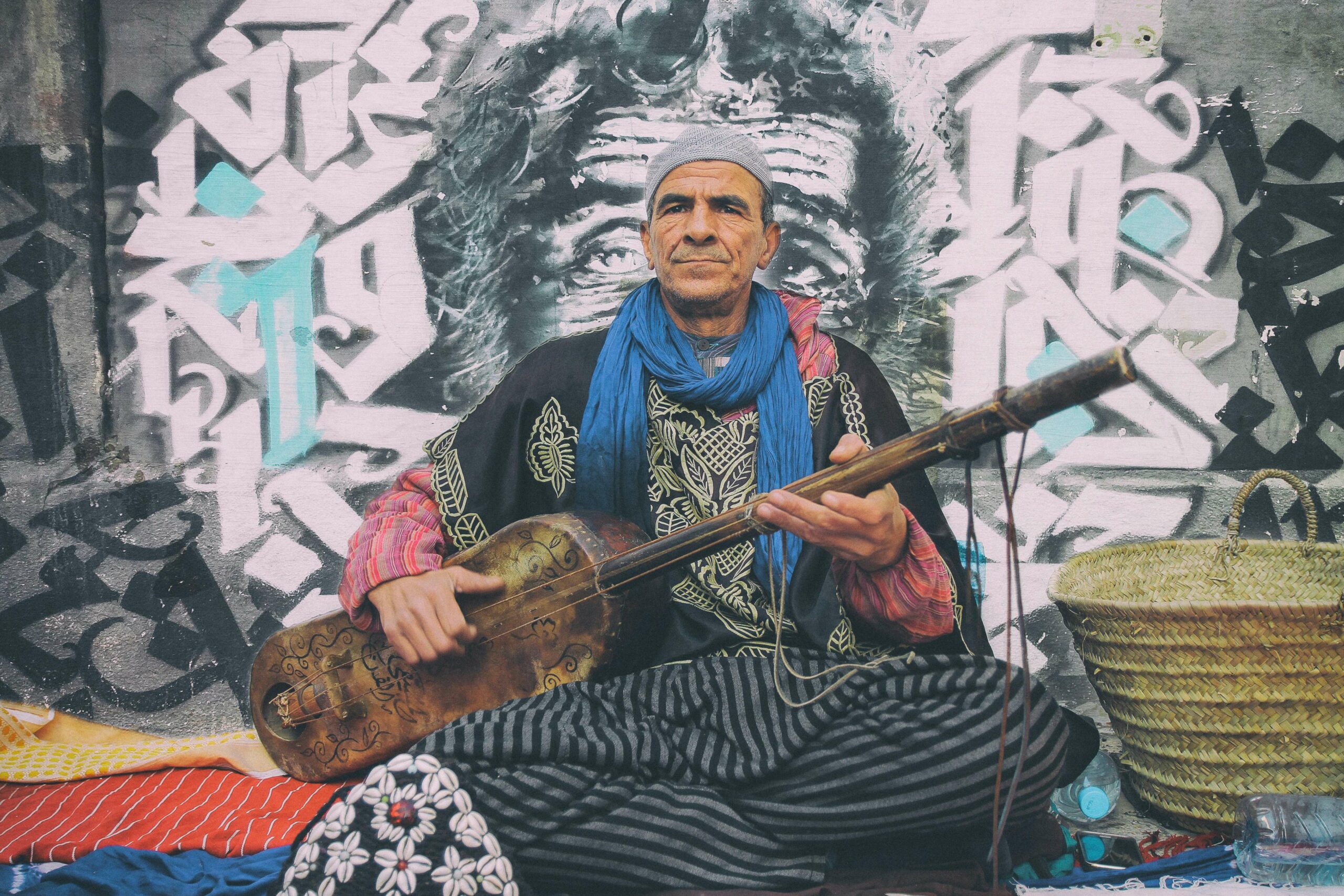
Gnawa culture grew from the experience of people who were enslaved and brought north across the Sahara. UNESCO traces the tradition back to at least the 16th century and describes it as a set of musical events, fraternal practices and therapeutic rituals where the secular mixes with the sacred.
Over time, the Gnawa formed their own communities and developed a spiritual music that expresses both nostalgia for the homeland and gratitude for freedom. They honor Bilal, the first Black convert to Islam and the Prophet’s muezzin, as a patron figure, which anchors their identity within Islam while keeping their African heritage.
In December 2019, UNESCO added Gnawa to its list of Intangible Cultural Heritage of Humanity. Brotherhoods that were once marginalized are now celebrated, especially through the Gnaoua festival in Essaouira that began in 1997.
Gnawa Music: Rhythm, Instruments and Meaning
A traditional Gnawa ceremony, called a lila, runs through the night and aims to heal and bring peace between people and the spiritual world. The tempo rises slowly until participants enter a state of trance.
The sound rests on three elements:
- The guembri: a three-stringed bass lute that plays repeating, hypnotic patterns.
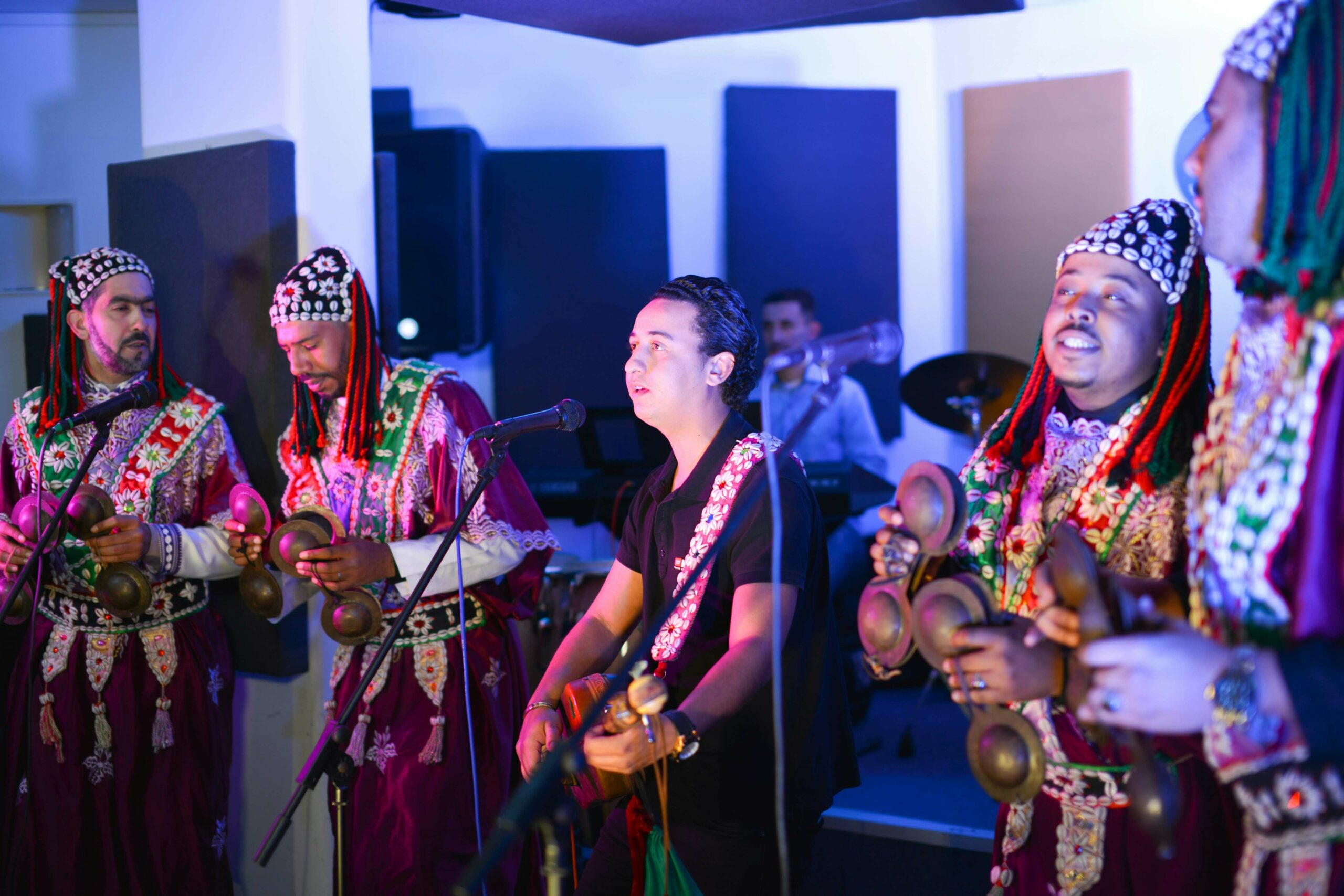
- The qraqeb: metal castanets that create a driving rhythm. UNESCO notes that in rural areas groups also use large drums.
- Call-and-response singing: a leader sings and the group answers, often in a mix of Arabic, Amazigh and other languages.
UNESCO also notes that urban groups often wear colorful embroidered costumes, while rural groups wear white. If you see white clothing in Khamlia, that is part of this rural tradition.
Visiting Khamlia: Practical Tips
Khamlia is easiest to visit as part of a Merzouga trip. The village is about 10 minutes from Merzouga by car. Performances are commonly offered for visitors, often arranged through your guide, your accommodation or the local music association, so ask in advance.
- Expect a short performance, not a full ceremony. The lila is a sacred healing ritual, and a tourist show is a shorter version of it.
- Pay fairly and tip performers. Community tourism is an important income for the village.
- Ask before taking photos or videos, especially of women, children and ceremonies.
- Dress modestly and listen respectfully. Clap along if invited, and ask if you are unsure.
- Time your visit well. Late afternoon is pleasant, and you can follow it with a sunset and camel ride desert tour or an overnight Sahara experience.
- Check local events. Some sources mention a summer festival in the village, so ask locally about dates.
- Use a registered local guide for desert excursions, such as the Sahara desert excursion.
While you are in the area, try local dishes such as medfouna, tagine or couscous.
Final Thoughts
Khamlia Gnawa is more than a performance for visitors. It is the voice of a community that turned a painful history into music of faith, memory and belonging. Listen with an open mind, ask questions respectfully and support the people who keep the tradition alive.
Want to explore more? Learn about Erfoud, see our Sahara desert excursion page, or contact us to suggest corrections or share your local knowledge.
Ready to plan your trip?
Explore our Sahara desert excursion page, learn more about Erfoud, or contact us to suggest corrections or share your local knowledge.